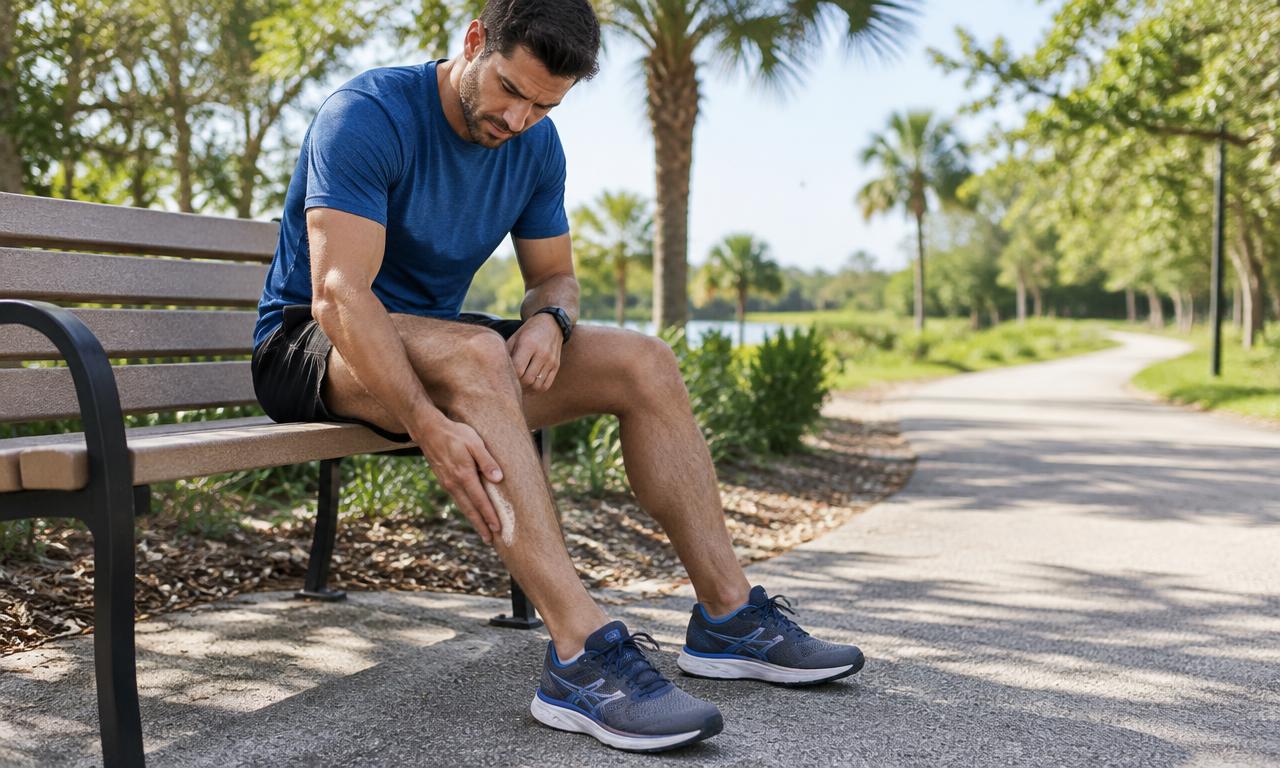
The line between shin splints and a stress fracture is less distinct than most runners realize. They sit on a continuum, and treatment depends on where the pathology has progressed.
The runner describes shin pain that started three weeks ago. It was mild at first, mostly after runs. Now it's present during runs and lingers for hours afterward. She can point to a specific spot on the inside of her tibia that's tender. She's been told she has shin splints and should rest, ice, and take ibuprofen.
She might have shin splints. Or she might have a stress fracture. The distinction matters because the treatments are different, and misdiagnosis can delay recovery or allow pathology to progress.
The continuum
Current understanding treats bone stress injuries as a continuum rather than distinct categories:
Early stage: Medial tibial stress syndrome (MTSS) — the classic "shin splints." Pain along the medial border of the tibia, typically distributed over a broader area. Caused by stress on the periosteum and surrounding soft tissues from repetitive loading.
Middle stage: Stress reaction — bone remodeling has fallen behind loading demands. The bone shows edema and early stress changes on advanced imaging but not yet a fracture line.
Late stage: Stress fracture — an actual fracture line has developed. Pain is typically well-localized, often severe, and may be present at rest.
Continuing to load through pain can move the pathology from early to late stages over weeks to months.
How to tell them apart clinically
Features suggesting stress fracture: - Point tenderness over a coin-sized area or smaller - Pain during walking or at rest - Pain worse at night - Rapid progression over days to weeks - History of recent training increase, menstrual irregularity, or low energy availability - Hopping on the affected leg reproduces sharp pain
Features suggesting MTSS: - Tenderness distributed along several centimeters of the medial tibia - Pain primarily with activity, resolving within hours after - Gradual onset over weeks - No pain at rest or with walking - Hopping may produce discomfort but not sharp pain
Imaging considerations
X-ray has limited sensitivity for early stress injuries. Stress fractures often don't appear on X-ray until healing begins. MRI is the most sensitive imaging and can identify stress reaction before a fracture develops.
Treatment differs by stage
MTSS treatment focuses on load management: - Relative rest (reducing running volume, not complete cessation) - Cross-training with low-impact activity - Progressive calf and tibialis posterior strengthening - Gait assessment - Shockwave therapy has growing evidence for chronic MTSS
Stress reaction treatment: - Significant reduction or temporary cessation of running - Cross-training on cycling, swimming, elliptical - Boot or orthotic support if indicated - Gradual return to running over 6 to 12 weeks
Stress fracture treatment: - Non-weight bearing or protected weight bearing depending on location - Typical healing time 6 to 12 weeks for low-risk sites - Nutritional assessment (vitamin D, calcium, energy availability) - Gradual return to running over 2 to 4 months
High-risk vs low-risk sites
Low-risk sites (medial tibia, fibula, most metatarsals) typically heal with conservative treatment. High-risk sites (anterior tibia, navicular, 5th metatarsal, femoral neck) have poor blood supply and higher rates of non-union, requiring more aggressive management.
Frequently Asked Questions
- Can I run through shin splints?
- Early MTSS may tolerate reduced running with modifications. Running through worsening pain can progress MTSS to stress reaction or fracture. If pain is increasing session to session, stop running and get assessed.
- How long until I can run after a stress fracture?
- Typically 2 to 4 months depending on site, grade, and healing response.
- What causes stress fractures?
- Multifactorial: training errors, biomechanical factors, nutritional deficiencies, hormonal factors, and surface or footwear changes.
- Are shockwave treatments appropriate?
- For low-grade stress reactions and chronic MTSS, shockwave has supporting evidence. Acute fractures typically need offloading first.
If you have persistent shin pain from running, schedule a consultation at Stryde Health and Performance in Boynton Beach. Bone stress injuries require accurate staging — the sooner the right diagnosis is made, the better the outcome.