Rotator cuff tendinopathy is one of the most common causes of shoulder pain in adults. When chronic and particularly when calcific, shockwave therapy has strong evidence as an alternative to injection or surgery.
Chronic shoulder pain from rotator cuff tendinopathy affects a substantial portion of adults over 40. The typical treatment path — rest, physical therapy, anti-inflammatories, cortisone injection, and eventually surgical consultation — leaves many patients still symptomatic despite completing each step.
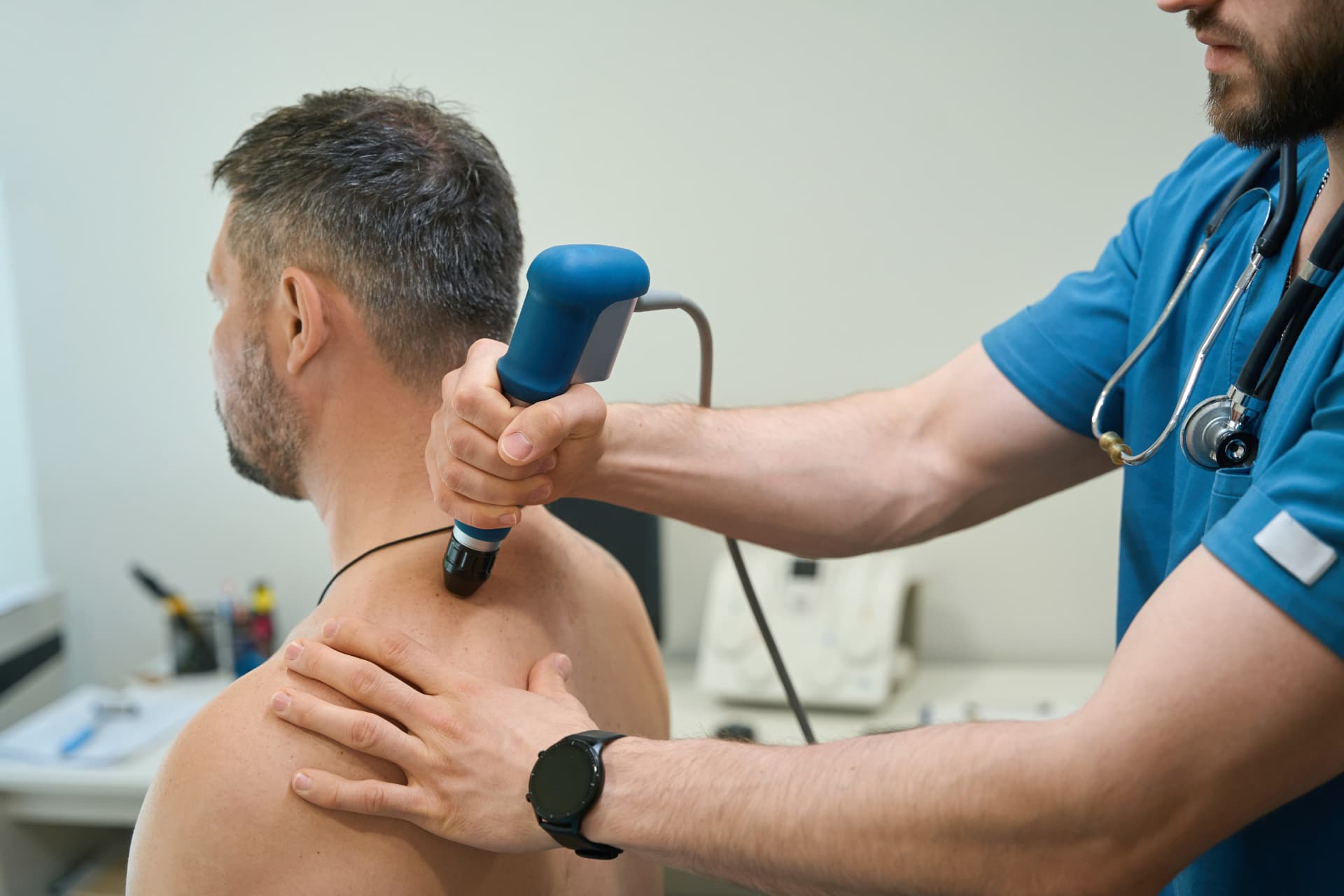
For chronic rotator cuff tendinopathy, and especially for calcific tendinopathy, extracorporeal shockwave therapy has some of the strongest evidence of any non-surgical intervention.
The two forms of chronic rotator cuff pathology
Non-calcific rotator cuff tendinopathy involves degenerative changes in the tendons of the rotator cuff — most commonly the supraspinatus, which sits at the top of the shoulder. The tissue has failed to heal normally, resulting in disorganized collagen, pain, and often functional limitation.
Calcific rotator cuff tendinopathy involves the additional feature of calcium deposits within the tendon substance. These deposits can be visible on X-ray and may or may not correlate with symptom severity. Calcific tendinopathy can be extremely painful, particularly during phases when the deposits are undergoing resorption.
Both forms respond to shockwave therapy, but the mechanisms and treatment considerations differ somewhat.
The evidence for shockwave in rotator cuff tendinopathy
Extracorporeal shockwave therapy has strong evidence for both calcific and non-calcific rotator cuff tendinopathy in the published literature:
For calcific tendinopathy, shockwave has particularly strong evidence. Multiple randomized controlled trials have shown that focused shockwave can:
- Reduce or eliminate calcific deposits (visible on imaging)
- Substantially reduce pain
- Improve function
- Reduce the need for surgical intervention
Response rates for calcific rotator cuff tendinopathy treated with focused shockwave typically range from 60% to 80% in the published literature.
For non-calcific tendinopathy, evidence is more variable but still supportive for chronic cases. Response rates are somewhat lower than for calcific cases but still meaningful.
The International Society for Medical Shockwave Treatment includes rotator cuff tendinopathy — both calcific and non-calcific — among the established indications for shockwave therapy.
Why this matters clinically
The treatment cascade for chronic rotator cuff issues typically includes:
- Rest, physical therapy, home exercises
- NSAIDs
- Cortisone injection into the shoulder
- Repeat cortisone injection
- MRI and orthopedic consultation
- Surgical consideration
Between the failed conservative treatments and surgical consideration, shockwave therapy is often the missing option. Many patients undergo surgical consultation before ever being offered shockwave — even though shockwave has strong evidence and would resolve a significant percentage of these cases without surgery.
For calcific tendinopathy specifically, the ability of shockwave to resolve calcific deposits — sometimes on a single treatment — represents an option that many patients aren't aware exists.
The Stryde approach for rotator cuff tendinopathy
Treatment plans typically integrate:
Focused shockwave therapy as the primary tissue-treating modality. Typically 3 to 6 sessions spaced one week apart, targeting the specific area of pathology identified on examination and imaging.
Radial shockwave therapy for surrounding musculature — particularly the deltoid, trapezius, and rhomboid areas that develop secondary tension in response to shoulder pathology.
Dry needling of surrounding musculature contributing to pain patterns and dysfunctional loading.
EMTT in select cases with extensive pathology or slow response.
Chiropractic manipulation of the cervical spine, thoracic spine, and rib articulations that contribute to shoulder mechanics.
Progressive rehabilitation targeting rotator cuff strengthening, scapular control, and functional movement patterns. This is essential — shockwave initiates the tissue healing response, but rebuilding functional capacity requires the ongoing exercise work.
Return to sport progression for active adults, guided by symptom response and functional milestones.
When is shockwave appropriate?
Shockwave therapy is generally appropriate for rotator cuff tendinopathy when:
- Symptoms have persisted 3 or more months
- Conservative treatment (rest, PT, home exercises) has produced insufficient improvement
- No large full-thickness rotator cuff tear is present (partial tears can still respond)
- No recent cortisone injection has been received (typically a 4 to 6 week washout)
- No contraindications to shockwave are present
For calcific tendinopathy specifically, shockwave is often appropriate earlier in the treatment course given its strong evidence and ability to potentially resolve the calcific deposits.
When surgery is actually appropriate
Surgical treatment for rotator cuff pathology is genuinely indicated in some cases:
- Large or massive full-thickness rotator cuff tears, particularly in younger, more active patients
- Traumatic rotator cuff tears in patients with functional demand
- Progressive functional decline despite comprehensive conservative care
- Certain revision surgical situations
Most chronic rotator cuff tendinopathy does not meet these criteria and can be managed with combined conservative care including shockwave therapy.
Frequently Asked Questions
- Will shockwave dissolve my calcium deposits?
- For calcific rotator cuff tendinopathy, focused shockwave can break down and facilitate resorption of calcific deposits. Not all deposits respond, but the resolution rate in published studies is substantial. Follow-up imaging often shows meaningful reduction or elimination of deposits.
- Can I have shockwave with a partial rotator cuff tear?
- Partial thickness tears can still respond to shockwave, particularly when combined with rehabilitation. Full-thickness large tears typically require different management.
- How long until I know if shockwave is working?
- Some patients notice improvement during the treatment course. Most improvement develops progressively over 8 to 16 weeks after treatment ends. Reassessment at 12 weeks typically determines overall response.
- Do I need to do physical therapy alongside shockwave?
- Yes. Shockwave initiates tissue changes, but building functional capacity requires progressive rehabilitation. The combined approach produces substantially better outcomes than shockwave alone.
If you've been dealing with chronic shoulder pain from rotator cuff tendinopathy and standard treatment hasn't resolved it, schedule a consultation at Stryde Health and Performance in Boynton Beach. Extracorporeal shockwave therapy for the rotator cuff is one of the most evidence-based advanced treatments we offer.