Hip impingement has become one of the more frequently diagnosed and surgically treated conditions in active adults. Most cases don't actually need surgery.
The golfer in his fifties walks in with an MRI report mentioning "cam-type femoroacetabular impingement" and a labral tear. He's been told he needs arthroscopic hip surgery to shave down the bone and repair the labrum if he wants to keep playing golf. He's asking whether there's another option before committing to surgery.
There usually is. Hip impingement has become one of the more over-diagnosed and over-treated conditions in orthopedic medicine, and the gap between imaging findings and symptomatic conditions needing surgery is often large.
What FAI actually is
Femoroacetabular impingement (FAI) describes abnormal contact between the femoral head/neck and the acetabulum (hip socket) during motion. There are three types:
Cam-type: Extra bone on the femoral head-neck junction. More common in young males and athletes.
Pincer-type: Over-coverage of the femoral head by the acetabulum. More common in middle-aged females.
Mixed-type: Features of both.
The imaging problem
Here's what gets missed: cam and pincer morphology are common in asymptomatic adults. Research has shown that a significant percentage of adults with no hip symptoms have radiographic findings of FAI. The morphology alone doesn't cause symptoms.
Having the morphology plus symptoms doesn't automatically mean the morphology is causing the symptoms. Many symptomatic cases involve other contributors — hip mobility deficits, muscle imbalances, lumbar spine dysfunction — that produce pain in a hip that happens to have FAI morphology.
What conservative care can achieve
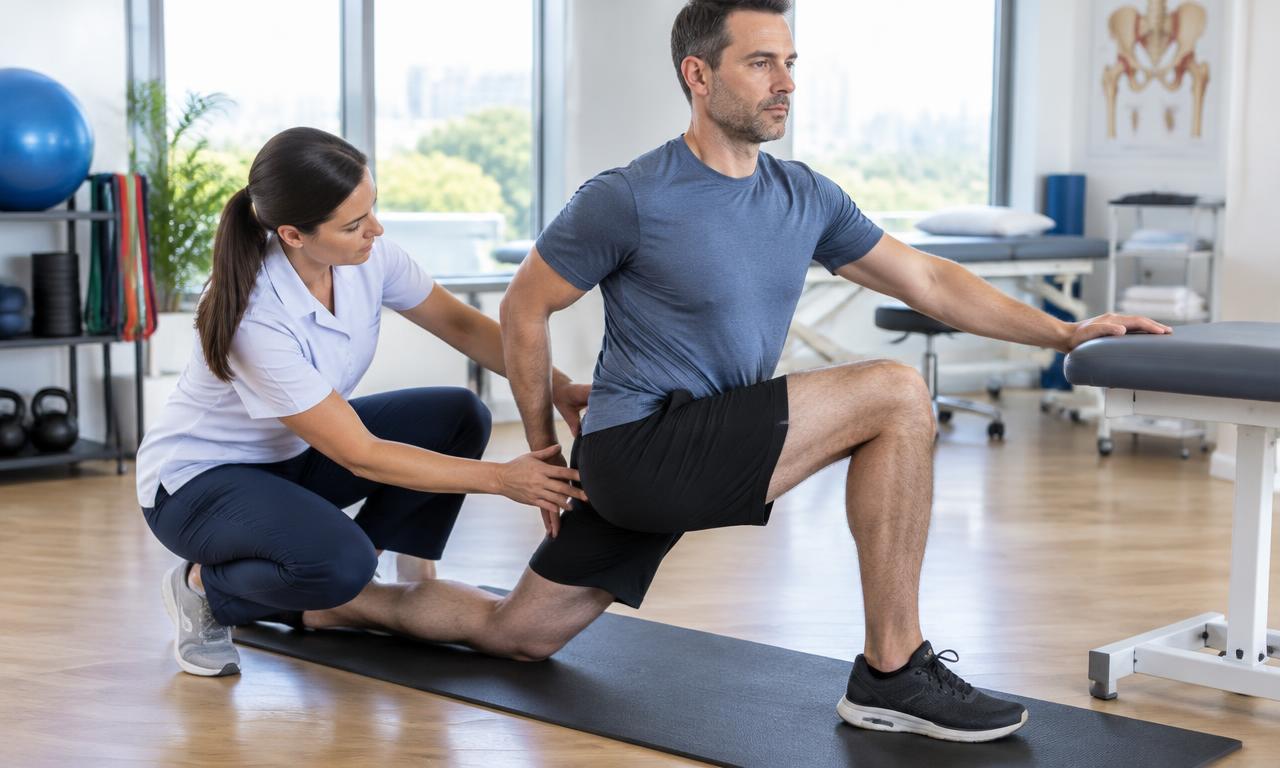
For many FAI patients, conservative treatment resolves symptoms without addressing the bony morphology at all:
Hip mobility restoration — particularly hip internal rotation and extension, which are commonly restricted in FAI patients.
Gluteal strengthening — gluteus medius and maximus function determines how well the hip is controlled during activity.
Core and lumbar stabilization — reduces compensatory loading at the hip.
Shockwave therapy for secondary soft tissue changes at the hip capsule, gluteal tendons, or iliopsoas.
Dry needling of the deep gluteals, iliopsoas, and hip rotators.
Chiropractic manipulation of the lumbar spine, SI joints, and hip where indicated.
Movement pattern retraining — squat mechanics, hip hinge, sport-specific motions.
Activity modification — avoiding end-range deep flexion positions that provoke impingement.
When surgery might actually be appropriate
Hip arthroscopy for FAI has meaningful indications but is often over-used. Surgery is more appropriate when:
- Symptoms are severe and persistent despite 6+ months of appropriate conservative care
- Clear mechanical symptoms (catching, locking) suggest significant labral pathology
- Young, high-demand athletes with clear FAI morphology and classic symptoms
- Imaging shows significant labral tearing with corresponding clinical findings
For most middle-aged recreational athletes with FAI morphology and hip pain, comprehensive conservative care should be the first line.
The golfer specifically
Golf loads the hip through a specific range — particularly internal rotation at the end of the backswing and external rotation at the end of the follow-through. Golfers with FAI often develop symptoms with golf before developing symptoms with other activities.
Golf swing modification combined with hip capacity building often resolves symptoms without surgical intervention. See Why Your Backswing Tightens After 50 for the mobility considerations specific to golf.
Timeline
Conservative care for FAI typically takes 12 to 24 weeks for meaningful resolution. Patients who commit to the full program and modify activities as recommended often return to golf and other sports without surgery.
Frequently Asked Questions
- If I have a labral tear on MRI, don't I need surgery?
- Not necessarily. Labral tears are extremely common on MRI in adults over 40, including in asymptomatic adults. Many symptomatic patients with labral tears improve with conservative care without the tear being repaired.
- Will the FAI morphology get worse without surgery?
- The bony morphology itself doesn't typically progress. Arthritic changes can develop over time, but conservative care doesn't accelerate this and may slow it by improving hip mechanics.
- How do I know if my pain is actually from FAI?
- Clinical examination plus imaging correlation helps determine this. Pain that reproduces with specific impingement tests, that occurs with end-range hip positions, and that corresponds to the morphology findings is more likely to be impingement-driven.
- Is EMTT appropriate for hip issues?
- EMTT can support tissue healing in chronic hip conditions and is sometimes used in combination with shockwave for persistent gluteal tendinopathy and iliopsoas issues that coexist with FAI.
If you've been told you need hip surgery for impingement, schedule a consultation at Stryde Health and Performance in Boynton Beach for an honest assessment of your conservative options. We treat FAI patients across Palm Beach County who want to exhaust non-surgical approaches before committing to surgery.