Physical therapy fails a meaningful percentage of patients — not because they didn't work hard enough, but because most PT clinics don't offer the modalities chronic conditions actually require.
Patients arrive at Stryde Health and Performance regularly with the same story: they've completed a course of physical therapy — sometimes multiple courses — and they still hurt. The exercises helped somewhat. The manual therapy felt good. But the underlying problem hasn't resolved, and they're not sure what to do next.
Physical therapy is an important part of musculoskeletal care. But it's not the complete answer for every condition, and the reason it fails a meaningful percentage of patients isn't effort or compliance. It's often what's missing from the treatment plan.
Here's what tends to be missing, and what to do about it.
The physical therapy model — and its gaps
Traditional outpatient physical therapy focuses primarily on:
- Manual therapy (hands-on soft tissue work and joint mobilization)
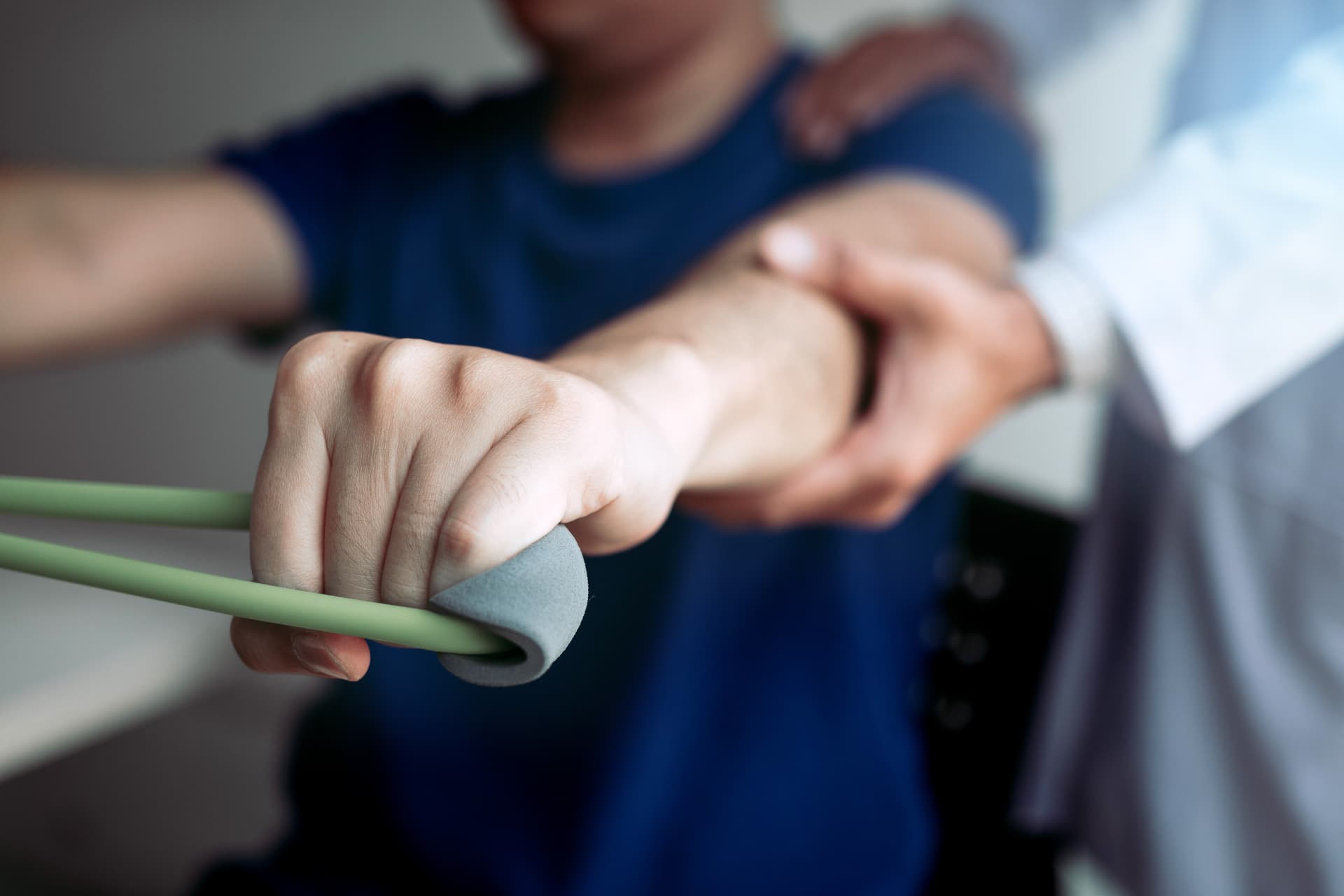
- Therapeutic exercise (targeted strengthening and mobility)
- Modalities like ultrasound, electrical stimulation, and heat/ice
- Patient education about movement and posture
This model works well for many conditions, particularly acute injuries and post-surgical rehabilitation. It works less well for chronic conditions where the tissue itself has changed structurally and requires interventions that outpatient PT typically doesn't offer.
The gaps become significant for conditions like:
- Chronic tendinopathy (Achilles, patellar, rotator cuff, tennis elbow)
- Chronic plantar fasciitis
- Post-injection failure conditions
- Long-standing myofascial pain patterns
- Conditions where imaging shows significant tissue degeneration
For these conditions, the exercise-based approach of standard PT may not be sufficient to remodel damaged tissue. Patients who commit fully to the process and still don't resolve are often dealing with pathology that requires additional interventions.
What's typically missing
Advanced modalities that target tissue remodeling. Extracorporeal shockwave therapy, EMTT, and similar modalities specifically stimulate cellular repair processes in ways that manual therapy and exercise cannot replicate. For chronic tendinopathy specifically, these modalities have stronger evidence than the standard PT approach.
Dry needling and trigger point-specific treatment. Some PT clinics offer dry needling, but many do not. For patients whose pain patterns are driven by myofascial trigger points, this can be the missing intervention.
Integrated chiropractic care. Physical therapy in the U.S. typically does not include high-velocity manipulation. For patients whose conditions involve joint restrictions in the spine or extremities, adding chiropractic care can address a component that PT alone leaves untreated.
Time and intensity for tissue remodeling. Insurance-driven PT often limits sessions and time per session. Chronic tissue conditions may require more sustained treatment than insurance authorizes.
Diagnosis reconsideration. Sometimes the problem isn't the treatment plan — it's that the initial diagnosis was incomplete or inaccurate. Chronic conditions that don't respond may benefit from a fresh clinical assessment that reconsiders what's actually driving symptoms.
When to consider alternative approaches
Consider seeking care beyond standard PT if:
- You've completed 6 or more weeks of consistent PT without meaningful improvement
- Your condition has been present for more than 6 months
- Your pain returns whenever you stop the exercises
- You've been told there's "nothing more we can do" or referred to injections or surgery
- You've been told the imaging findings are "just aging" but the pain continues to limit your activity
These are signs that the standard model isn't sufficient for your specific condition — and that additional approaches may be warranted.
What advanced care can add
At Stryde Health and Performance, patients who have failed physical therapy typically receive:
A fresh diagnostic assessment. We don't assume the previous diagnosis was correct or complete. Many patients discover on assessment that additional or different pathology is contributing to their symptoms.
Advanced modalities. Focused and radial shockwave therapy, EMTT, dry needling, and other interventions that most PT clinics don't offer.
Integrated chiropractic care. For conditions with joint or spinal contributions, chiropractic manipulation is integrated into the treatment plan.
Continued rehabilitation. The exercise and mobility work you did in PT wasn't wrong — it just wasn't enough on its own. Ongoing progressive rehabilitation continues to be part of the plan.
Sport-specific loading progressions. For active adults, return to sport requires more than "you can go back to running now." Progressive protocols specific to your activity, guided by clinical response, are built into treatment.
What this doesn't mean
This isn't a criticism of physical therapy. PT is essential for many conditions and works well for the majority of acute musculoskeletal problems. Most PT clinicians are skilled and dedicated.
The point is that PT is one tool. For chronic conditions that don't respond, adding other tools is often the answer — not because the PT was wrong, but because the condition required more.
Frequently Asked Questions
- Do I need to stop physical therapy to start advanced modalities?
- Not necessarily. In many cases, advanced modalities complement ongoing PT. In other cases, the treatment shifts. This is determined case-by-case.
- Is this covered by insurance?
- Advanced modalities like shockwave therapy and EMTT are generally not covered by insurance in the United States. Chiropractic care coverage varies. Most patients at Stryde are on a self-pay or concierge model.
- How do I know if my condition is one that needs more than PT?
- Time and response guide this. If you've had appropriate PT for 6+ weeks and haven't seen meaningful progress on your primary complaint, a reassessment is warranted. Some conditions simply require additional interventions.
- Is this appropriate for post-surgical patients?
- Advanced modalities can complement post-surgical rehabilitation in some cases. Timing and clearance from the surgeon matter. Discuss with your surgical team.
If physical therapy hasn't resolved your chronic musculoskeletal condition, schedule a consultation at Stryde Health and Performance in Boynton Beach. We serve patients throughout Palm Beach County who have exhausted standard treatment and are looking for a different approach.