Dry needling and acupuncture are frequently confused. They use the same tool but treat the body based on entirely different frameworks — and the differences matter.
Patients often walk into Stryde Health and Performance asking about dry needling and, in the same sentence, comparing it to acupuncture. The confusion is understandable — both involve thin needles inserted through the skin. But they are fundamentally different treatments based on different frameworks with different goals.
Here's the clinical difference.
What is dry needling?
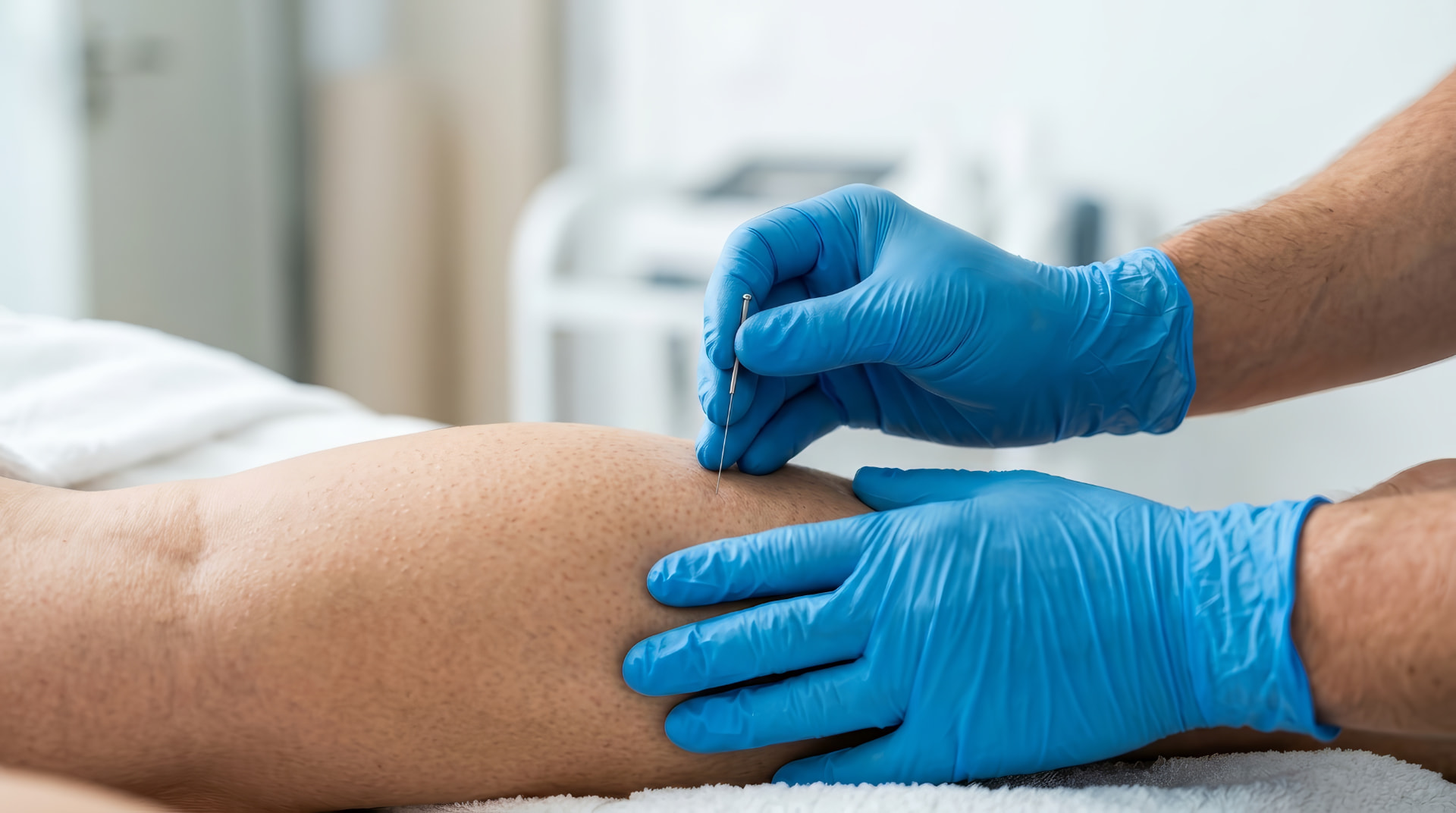
Dry needling is a Western medical technique that uses thin, solid, filiform needles to release myofascial trigger points, reduce muscle tension, and stimulate tissue healing. It is based on Western anatomy and neurophysiology — specifically the identification of trigger points (hyperirritable spots in taut bands of skeletal muscle) that produce local and referred pain.
The needle is inserted directly into the dysfunctional muscle or trigger point. When placed correctly, it often produces a local twitch response — a rapid involuntary contraction of the muscle — which is the therapeutic target. The twitch is associated with reduction in trigger point activity, decreased pain, and improved muscle function.
Dry needling is performed by licensed clinicians including chiropractors, physical therapists, and physicians who have completed additional certification training. Regulation varies by state; in Florida, dry needling is within the scope of practice for appropriately trained chiropractors.
What is acupuncture?
Acupuncture is a component of Traditional Chinese Medicine (TCM) dating back over two thousand years. It is based on the concept of qi (energy) flowing through meridians in the body, and points along those meridians are used to correct imbalances that produce disease or pain.
Acupuncture needles are inserted at meridian points, which may or may not correspond to the location of the patient's pain. The framework is holistic — a patient with shoulder pain might receive needling at points on the hand or foot based on the meridian system.
Acupuncture is performed by licensed acupuncturists who complete graduate-level training in TCM. In Florida, acupuncturists hold an Acupuncture Physician (AP) license.
The key differences
Framework. Dry needling is based on Western neuromusculoskeletal anatomy and trigger point science. Acupuncture is based on Traditional Chinese Medicine meridian theory.
Needle placement. Dry needling places needles directly into dysfunctional muscle tissue or trigger points identified by physical examination. Acupuncture places needles at meridian points based on the patient's diagnostic pattern within the TCM framework.
Goal of treatment. Dry needling aims to produce a local twitch response, release trigger points, and improve muscle function. Acupuncture aims to restore energy flow and correct systemic imbalances.
Provider. Dry needling is performed by chiropractors, physical therapists, and physicians with additional training. Acupuncture is performed by licensed acupuncture physicians.
Session duration. Dry needling sessions typically last 15 to 30 minutes. Acupuncture sessions typically last 45 to 60 minutes with needles retained in position.
Which is more effective?
Both have supporting evidence for specific applications. Dry needling has strong evidence for myofascial pain, chronic muscle tension, and certain tendinopathies. Systematic reviews in the Journal of Orthopaedic and Sports Physical Therapy support its use for musculoskeletal pain.
Acupuncture has evidence for chronic pain, tension headaches, and certain functional conditions. The evidence bases don't compete directly — the treatments are addressing different pathophysiological targets.
For sports injuries, muscle dysfunction, and trigger point-driven pain, dry needling is typically the more appropriate choice. For broader chronic pain, headaches, or when TCM-based care is preferred, acupuncture may be more appropriate.
How dry needling is used at Stryde
At Stryde Health and Performance, dry needling is used as part of comprehensive treatment plans for:
- Chronic muscle tightness that hasn't responded to stretching or foam rolling
- Trigger points contributing to referred pain patterns
- Rotator cuff dysfunction and shoulder impingement
- Chronic hamstring, calf, and hip flexor tension
- Neck and upper back myofascial pain
- As an adjunct to shockwave therapy for tendinopathies
The treatment is typically combined with chiropractic manipulation, rehabilitation exercise, and other modalities based on the presenting condition.
Frequently Asked Questions
- Does dry needling hurt?
- Most patients feel the needle insertion as a brief pinch, followed by a deeper aching sensation when the muscle is engaged. The local twitch response feels like a quick cramp. Most patients tolerate it well and describe post-treatment soreness similar to after intense exercise, lasting 24 to 48 hours.
- How many dry needling sessions do most patients need?
- Response varies by condition. Acute muscle issues often resolve in 2 to 4 sessions. Chronic tension patterns typically require 6 to 10 sessions. The clinical response guides the plan.
- Is dry needling safe?
- When performed by properly trained clinicians, dry needling has an excellent safety profile. Serious complications are rare. Minor side effects include bruising, temporary soreness, and occasional lightheadedness.
- Can I do dry needling if I'm afraid of needles?
- The needles used in dry needling are very thin — thinner than the needles used for injections or blood draws. Most patients with needle anxiety tolerate dry needling well once they experience it. Discussing your concerns with your clinician beforehand is worthwhile.
If chronic muscle pain or trigger points have limited your activity and other treatments haven't resolved them, schedule a consultation at Stryde Health and Performance in Boynton Beach. Dry needling is one of several advanced modalities we integrate into treatment plans for chronic musculoskeletal pain.