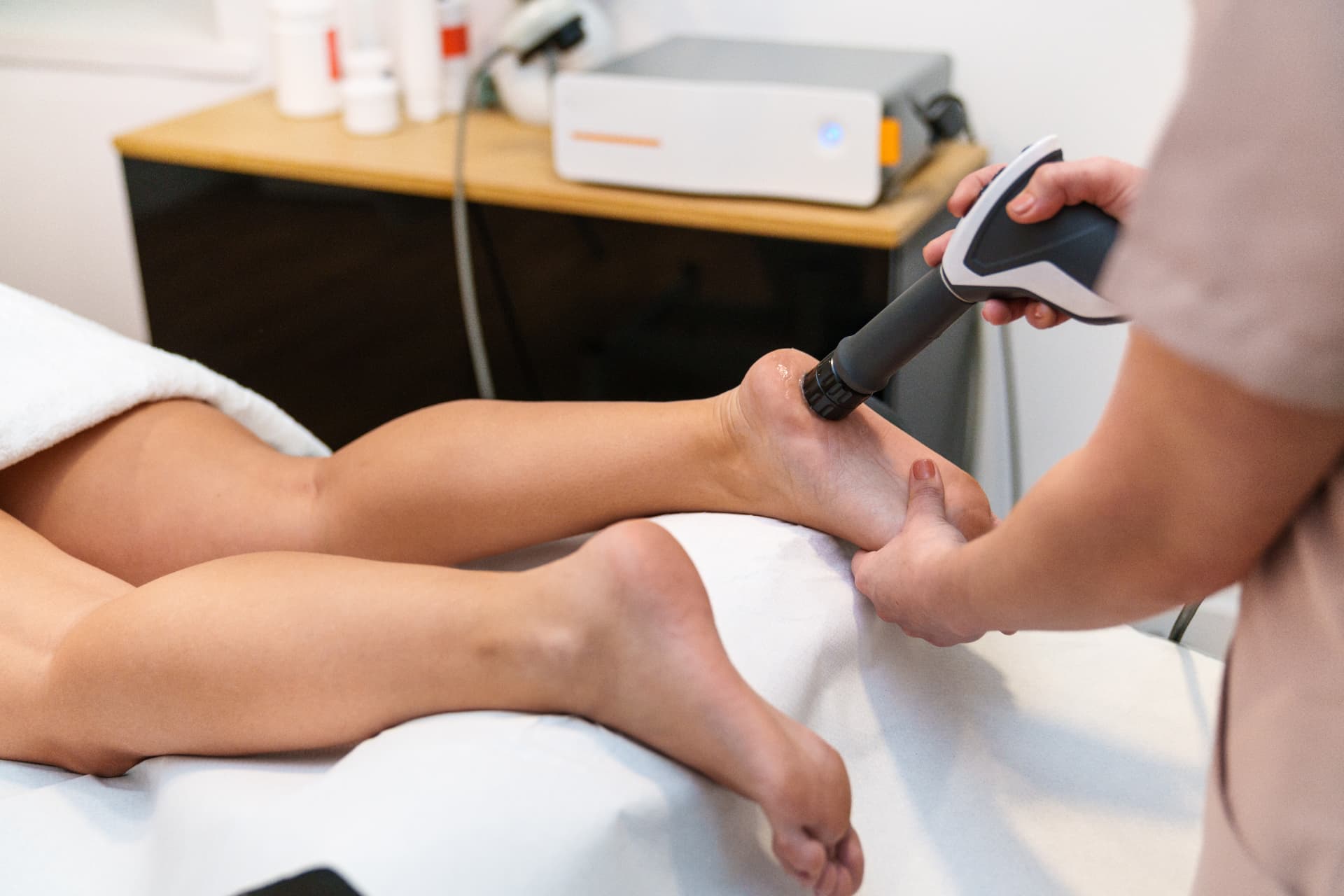
Extracorporeal shockwave therapy is not a magic bullet, but for specific chronic conditions it has some of the strongest evidence of any non-surgical intervention. Here's what actually works and what doesn't.
When patients research shockwave therapy, they encounter two very different presentations. On one side, marketing materials promise dramatic outcomes for a wide range of conditions. On the other side, skeptical articles suggest it's expensive placebo. The truth sits between these positions — and the details matter.
At Stryde Health and Performance, we use shockwave therapy extensively because for specific conditions, it has stronger evidence than most non-surgical interventions available. But we don't use it for everything, and we don't oversell what it can do.
Here's an honest look at the evidence.
Conditions with strong evidence for shockwave therapy
The following conditions have substantial evidence from randomized controlled trials and systematic reviews supporting the use of extracorporeal shockwave therapy:
Chronic plantar fasciitis. Some of the strongest evidence of any non-surgical intervention. Multiple systematic reviews support both focused and radial shockwave. FDA-approved for this indication.
Chronic lateral epicondylitis (tennis elbow). Strong evidence base with FDA approval for focused shockwave. Effective particularly for chronic cases that have failed other conservative treatment.
Calcific rotator cuff tendinopathy. Strong evidence. Focused shockwave can break down calcific deposits and reduce symptoms, sometimes avoiding surgical intervention.
Chronic Achilles tendinopathy (mid-portion). Multiple studies support shockwave for cases persisting beyond 6 months of conservative treatment.
Chronic patellar tendinopathy (jumper's knee). Growing evidence base supporting shockwave for chronic cases.
Greater trochanteric pain syndrome (chronic gluteal tendinopathy). Increasing evidence for shockwave in this common hip condition.
Non-union and delayed-union fractures. Focused shockwave has established evidence for stimulating bone healing in delayed or non-union cases.
For these conditions, response rates in the published literature typically range from 60% to 80% when patients meet appropriate criteria and complete the treatment protocol.
Conditions with moderate or developing evidence
Insertional Achilles tendinopathy. Evidence is more limited than for mid-portion. Response is more variable.
Chronic hamstring tendinopathy. Growing evidence base but fewer high-quality trials than more common conditions.
Chronic elbow tendinopathies beyond tennis elbow. Some evidence for medial epicondylitis (golfer's elbow) and other elbow tendinopathies.
Chronic muscle trigger points. Radial shockwave has evidence for myofascial pain, though the mechanism differs somewhat from tendinopathy applications.
Certain forms of osteoarthritis. Developing evidence for shockwave in knee and hip osteoarthritis, though this is less established than tendinopathy indications.
Conditions where evidence is weak or absent
Shockwave therapy has been promoted for various conditions where the evidence base is limited or non-existent. Being honest about this matters.
Acute injuries. Shockwave is designed for chronic degenerative conditions. Applying it to acute injuries is not evidence-based and may not be helpful.
Sexual dysfunction (in some marketing contexts). Marketing of shockwave for erectile dysfunction and similar conditions runs ahead of the evidence in most cases. Some emerging research exists but is not yet at the level of established indications.
General wellness or non-specific pain. Shockwave for undefined conditions or general pain is not evidence-based.
Weight loss or cellulite. Marketing exists but evidence is minimal.
At Stryde, we use shockwave for conditions where the evidence supports its use. We don't use it as a general pain treatment.
Understanding the mechanism
Shockwave therapy works through several proposed mechanisms:
Mechanical stimulation of tissue remodeling. The pressure waves create controlled microtrauma that initiates a tissue healing response.
Neovascularization. New blood vessel formation in previously poorly vascularized tissue, supporting healing.
Alteration of pain signaling. Effects on peripheral nerve fibers may reduce chronic pain signaling independent of tissue changes.
Release of growth factors. Cellular response to shockwave includes release of growth factors that support tissue repair.
The mechanisms are still being researched, but the clinical effects are established for the conditions listed above.
What determines whether shockwave will work for you
Response to shockwave therapy varies. Factors that predict better outcomes include:
- Correct diagnosis matching an established indication
- Appropriate duration of symptoms (typically 3+ months of conservative treatment)
- No recent corticosteroid injection in the treatment area
- Completion of the recommended treatment course (typically 3 to 6 sessions)
- Continued rehabilitation exercise alongside shockwave
Factors that predict poorer outcomes include:
- Incorrect diagnosis
- Very long-standing conditions (though many still respond)
- Concurrent conditions not being addressed
- Recent corticosteroid injection
- Failure to complete treatment course
- No adjunctive rehabilitation
What honest expectations look like
For established indications, expect:
- Some patients notice change within the treatment course
- Most improvement develops progressively over 8 to 16 weeks after treatment ends
- Full response is typically evaluated at 12 weeks post-treatment
- Success rates in the 60% to 80% range for appropriate candidates
- Some patients require additional treatment courses or combined approaches
Shockwave is not a magic solution. It doesn't work for every patient or every condition. But for the right conditions in appropriate candidates, it produces meaningful outcomes with a strong safety profile.
Frequently Asked Questions
- Is shockwave therapy safe?
- For appropriate candidates, shockwave has an excellent safety profile. Serious complications are rare. Common minor side effects include temporary soreness, minor bruising, and skin redness that resolves within days.
- How long has shockwave therapy been used medically?
- Extracorporeal shockwave technology was originally developed for kidney stone treatment (lithotripsy) in the 1980s. Musculoskeletal applications began in the 1990s and have grown extensively since. FDA approvals for musculoskeletal indications began in the early 2000s.
- Is shockwave therapy the same at every practice?
- No. Different practices use different equipment (focused vs. radial, different manufacturers), different protocols, and different clinical approaches. Quality of care varies. Practices with sports medicine or musculoskeletal specialization tend to have more experience with appropriate patient selection and protocol design.
- Should I try shockwave therapy?
- For chronic tendinopathy, plantar fasciitis, calcific rotator cuff tendinopathy, or similar conditions that have failed 3+ months of conservative treatment, shockwave therapy is worth considering. The evidence base is strong for these indications. A clinical evaluation can determine if you're a good candidate.
If you have a chronic musculoskeletal condition and are wondering whether shockwave therapy could help, schedule a consultation at Stryde Health and Performance in Boynton Beach. An honest assessment determines whether you're a candidate and what treatment plan makes sense.