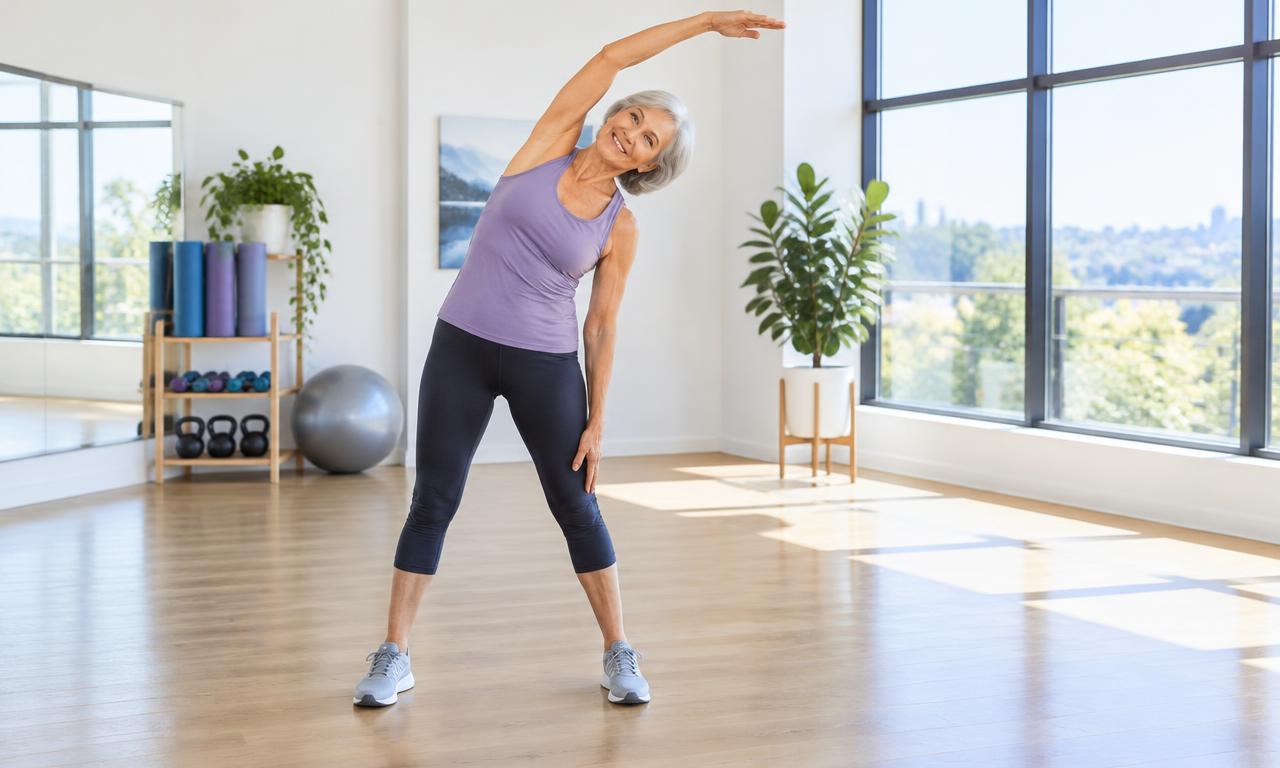
Not all mobility matters equally. Five specific ranges determine whether you'll be chasing grandchildren at seventy-five or watching from a chair.
Mobility work has become a fitness buzzword. Yoga, stretching, mobility routines, and "mobility training" dominate the conversation about aging well. Much of it is useful. Some of it misses the mobility ranges that actually predict long-term function.
For adults over sixty, five specific ranges matter more than general flexibility. Maintaining these is the difference between staying independent and losing the capacity for daily activities.
1. Hip extension
What it is: The ability to move the thigh behind the body, as happens during the final phase of walking.
Why it matters: Hip extension range determines gait quality. Loss of hip extension produces the shortened stride and forward-leaning posture that characterizes aging gait. Beyond appearance, limited hip extension reduces walking efficiency, increases fall risk, and contributes to chronic low back pain.
How to test: Lie face down, bend one knee to 90 degrees, and lift the thigh off the floor. Adequate range is 10-20 degrees of thigh lift with the knee bent. Less suggests limitation.
How to maintain: Daily hip flexor stretching. Walking with conscious attention to full stride length. Strength work including deadlifts and glute bridges. See Zone 2 Training for Adults Over 50 for the walking volume that supports this.
2. Shoulder flexion
What it is: The ability to raise arms fully overhead.
Why it matters: Shoulder flexion range determines capacity for reaching, lifting overhead, and functional tasks like washing hair or reaching cabinets. Loss predicts functional disability and often precedes falls (when reaching for items becomes unstable).
How to test: Standing with back against a wall, attempt to touch both hands flat against the wall above your head without arching the back. Full range is adequate.
How to maintain: Daily overhead reaching exercises. Progressive overhead loading (lifting weights overhead safely). Thoracic spine mobility work (restricted thoracic spine limits shoulder range). Avoid sustained forward postures.
3. Ankle dorsiflexion
What it is: The ability to bring the toes toward the shin while the heel stays on the ground.
Why it matters: Ankle dorsiflexion range determines squat depth, descent on stairs, and balance recovery. Loss contributes to falls, knee pain, and inability to perform basic functional movements like getting off the floor.
How to test: Kneeling with one knee on the ground, push the front knee forward over the toes without lifting the heel. Adequate range allows the knee to pass 4-5 inches past the toes.
How to maintain: Daily ankle mobility work. Calf stretching. Loaded ankle mobility exercises. Barefoot or minimal shoe time to maintain foot and ankle function.
4. Thoracic rotation
What it is: The ability to rotate the mid-back around its vertical axis.
Why it matters: Thoracic rotation determines capacity for rotational movements — turning to look behind you (important for driving), rotating to reach, and the rotational demands of sports like golf, tennis, and pickleball. Loss contributes to low back pain, neck pain, and shoulder dysfunction.
How to test: Seated with knees together, rotate your upper body one way, then the other. Each side should allow approximately 45 degrees of rotation.
How to maintain: Daily rotational mobility work. Thoracic extension exercises over a foam roller. Rotational movements during activity. Avoid sustained flexed postures.
5. Hip internal rotation
What it is: The ability to rotate the thigh inward at the hip.
Why it matters: Hip internal rotation is one of the first ranges to decline with aging. Loss drives compensatory movement patterns, contributes to hip and knee pain, and limits the smooth rotational mechanics required for stable walking, turning, and getting in/out of chairs.
How to test: Seated on the edge of a table with knees bent 90 degrees, rotate the shins outward (which internally rotates the hip). Both hips should produce similar range, ideally 30+ degrees.
How to maintain: Daily hip rotation exercises. Movements that involve crossing midline. Strength work that includes multiple planes of motion. See Why Your Backswing Tightens After 50 for the specific protocol golfers use to maintain this range.
The relationship between these ranges and daily life
The five ranges above predict functional capacity for:
- Walking with normal gait quality
- Climbing and descending stairs safely
- Reaching overhead for daily tasks
- Getting up from chairs and off the floor
- Turning to look behind (essential for driving)
- Maintaining athletic activities into aging
Adults who maintain these ranges typically maintain independence into their eighties and beyond. Adults who lose them progressively lose independence, sometimes rapidly.
The daily practice that maintains them
A 15-20 minute daily mobility practice targeting these five ranges is one of the highest-leverage interventions available for aging well. The specific exercises matter less than the consistency.
A basic structure:
- 2-3 minutes hip flexor and hip extension work
- 2-3 minutes shoulder flexion and overhead mobility
- 2-3 minutes ankle mobility and calf work
- 2-3 minutes thoracic rotation
- 2-3 minutes hip rotation work
This represents 10-15 minutes of focused work daily. Done consistently over years, it dramatically changes the trajectory of aging.
Frequently Asked Questions
- Is daily yoga enough?
- Yoga can address most of these ranges but doesn't always target them specifically or load them appropriately. For most adults over 60, a targeted mobility practice is more efficient than general yoga, though yoga is valuable as an additional practice.
- What if I've already lost significant range?
- Mobility can be regained at any age. Rate of improvement is slower in older adults than younger, but meaningful change is achievable with consistent work over months.
- Do I need stretching or strengthening?
- Both. Stretching restores range; strengthening makes the range usable. Strength training through full ranges of motion often improves mobility more than passive stretching alone.
- How does this relate to falls?
- All five ranges contribute to balance, stability, and fall prevention. Maintaining them dramatically reduces fall risk — one of the most significant threats to independence in aging.
If you want to build mobility work into a comprehensive program for aging well, schedule a consultation at Stryde Health and Performance in Boynton Beach. We help active adults across Palm Beach County build the physical capacities that predict long-term independence.