The IT band isn't tight. It can't be stretched. And the pain isn't friction. Understanding this changes what actually resolves the condition.
The runner describes lateral knee pain that started around mile six of her training runs. She's been foam rolling religiously. She's stretched in every position. She's tried new shoes. The pain keeps coming back, sometimes within the first mile now.
Here's the problem: the IT band can't be stretched. It's a thick fascial structure attached to the hip and the tibia with almost no elastic properties. Decades of biomechanical research have confirmed that the forces required to change the length of the IT band are far beyond what a person can generate through stretching or foam rolling.
If you've been doing these things for months without resolution, the issue isn't your effort. It's the treatment framework.
What IT band syndrome actually is
Current research describes IT band syndrome not as a friction condition between the band and the underlying bone, but as a compression condition. The IT band compresses a layer of innervated fat and connective tissue between itself and the lateral femoral condyle. With repetitive activity, this compression produces inflammation and pain in the compressed tissues — not in the band itself.
The IT band is doing what it's supposed to do. The problem is that the hip muscles — primarily the gluteus medius and gluteus maximus — aren't doing their job well enough to control the pelvis during activity. This produces excessive femoral adduction and internal rotation, which increases the compression force on the lateral knee structures.
The issue isn't the IT band. It's the hip.
Why stretching and rolling fail
Stretching a structure that can't be stretched produces no meaningful change in that structure. Foam rolling the outside of the thigh may feel like something is happening — there's sensation — but it doesn't change the mechanical problem driving the condition.
Patients sometimes feel brief relief because these interventions produce temporary sensory changes and may reduce muscle guarding in the vastus lateralis and tensor fasciae latae. But the underlying mechanical problem — gluteal weakness producing excessive hip adduction — remains unaddressed.
What actually resolves it
Progressive hip strengthening, with specific emphasis on gluteus medius and maximus function. Single-leg exercises, hip abduction loading, step-downs, and progression to sport-specific loading. This is the foundational intervention.
Dry needling of the tensor fasciae latae and vastus lateralis, which develop significant tension in response to the underlying dysfunction.
Shockwave therapy for chronic cases where the lateral knee tissues have developed secondary changes that don't resolve with mechanical correction alone.
Chiropractic manipulation of the lumbar spine, pelvis, and hip where joint restrictions contribute to altered mechanics.
Gait and running mechanics assessment, particularly for cadence, pelvic control, and foot strike patterns that load the lateral knee.
The cycling connection
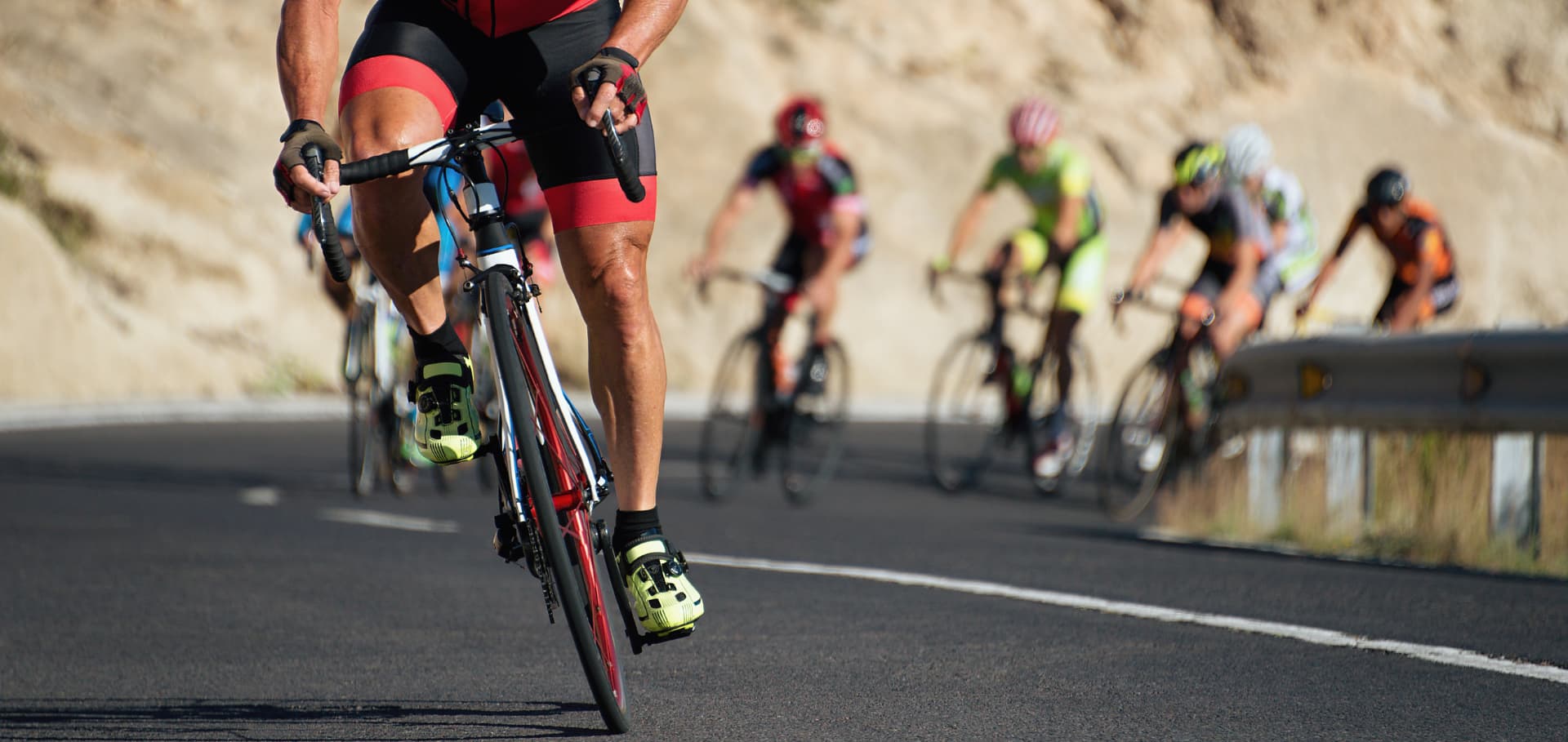
Cyclists develop IT band syndrome through a different mechanism than runners. The sustained hip flexion and repetitive knee movement load the IT band attachment at Gerdy's tubercle (where the band inserts on the tibia) rather than the lateral femoral condyle.
For cyclists, treatment often includes bike fit evaluation. A saddle that's too high produces excessive knee extension at the bottom of the pedal stroke, loading the IT band insertion repeatedly.
Timeline
Chronic IT band syndrome typically responds to appropriate combined treatment within 8 to 12 weeks. Return to full training volume usually takes 3 to 4 months. The hip strength work needs to continue well beyond symptom resolution.
Frequently Asked Questions
- Can I foam roll the IT band if I want to?
- It won't help the underlying problem, but it generally doesn't hurt. Time spent foam rolling would be better spent on hip strengthening exercises.
- How long until I can run again?
- Modified running is often possible during treatment with reduced volume, modified mechanics, or flat terrain. Return to full training typically takes 8 to 12 weeks.
- Is IT band syndrome related to leg length discrepancy?
- Leg length discrepancies can contribute to altered mechanics. True structural discrepancies may benefit from heel lifts; functional discrepancies from pelvic mechanics are addressed through manipulation and rehabilitation.
- Do I need an MRI?
- Rarely for IT band syndrome. Clinical examination is usually sufficient.
If chronic IT band pain has limited your running or cycling, schedule a consultation at Stryde Health and Performance in Boynton Beach. IT band syndrome is one of the conditions we treat regularly across Palm Beach County's active adult population.