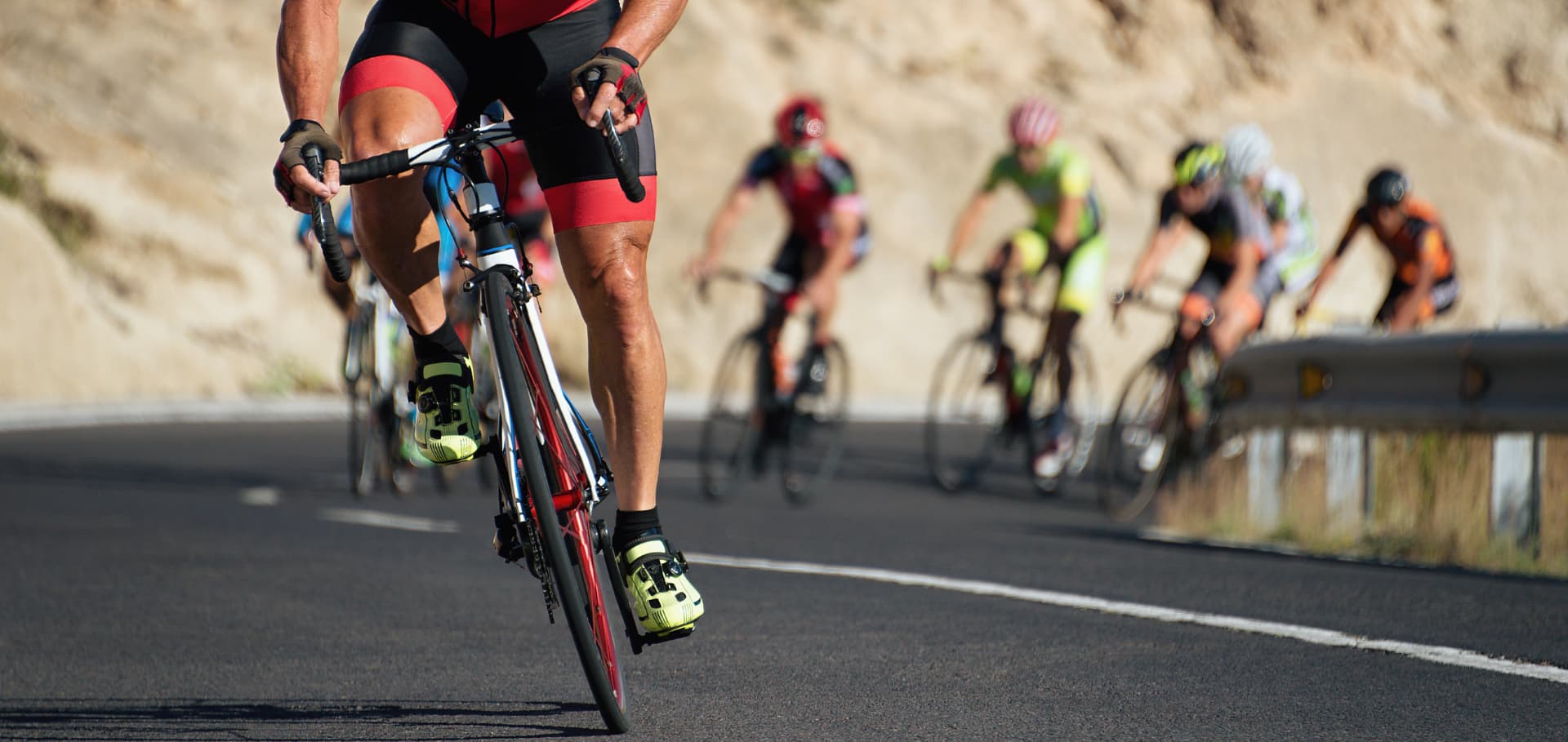
The deep pain in the buttock at the sit bone that plagues so many cyclists and runners is rarely just "tight hamstrings." It's usually chronic proximal hamstring tendinopathy — and it responds to specific treatment.
The patient sits gingerly in the consultation room, favoring one side. He describes deep pain right where the hamstrings attach to the pelvis — at the sit bone — that has plagued him for months. It hurts when he sits for extended periods. It hurts during and after cycling. Stretching has made it worse. He's been told his hamstrings are tight, and he needs to stretch more.
This is proximal hamstring tendinopathy, and the standard advice he's been given is actively counterproductive.
What proximal hamstring tendinopathy is
The hamstrings — three muscles running down the back of the thigh — attach to the pelvis at the ischial tuberosity, the sit bone. The tendon at this attachment can develop chronic tendinopathy: degenerative changes, disorganized collagen, failed healing response — the same pathophysiology seen in other chronic tendinopathies.
The condition is common in:
- Cyclists (sustained hip flexion loads the tendon)
- Long-distance runners (repeated loading during running)
- Adults who sit extensively (compression of the tendon against the sit bone)
- Middle-aged athletes who have started training more aggressively
Symptoms typically include:
- Deep pain at the sit bone, often described as "deep in the buttock"
- Worse with sitting, particularly on hard surfaces
- Worse during and after activity, often lingering the next day
- Sometimes radiating pain down the back of the thigh
- Stretching typically makes it worse rather than better
Why the standard advice is wrong
The most common advice patients receive is to stretch the hamstrings — traditional forward folds, seated stretches, PNF stretching. This advice is based on the assumption that the hamstrings are tight and stretching will help.
For chronic proximal hamstring tendinopathy, stretching is often counterproductive and sometimes actively harmful. The stretching compresses the affected tendon against the sit bone, aggravating the pathology. Patients often report that stretching provides brief relief followed by worse pain the next day.
The tight feeling in the hamstrings is real — but it's protective. The nervous system is guarding the injured tendon by increasing muscle tone. The tightness is a symptom, not the underlying problem. Addressing the underlying tendon pathology reduces the tightness naturally.
What actually works
Chronic proximal hamstring tendinopathy responds to specific loading and treatment approaches, similar to other chronic tendinopathies but with condition-specific considerations:
Progressive tendon loading, avoiding provocative positions early. Loading in shortened positions (like Romanian deadlifts from a slight elevation) is typically better tolerated than loading in fully lengthened positions (like straight-leg deadlifts). The loading is progressed as the tendon tolerates it.
Isometric loading for early symptom management. Long-duration isometric holds of the hamstrings can reduce pain acutely and are often the appropriate starting point.
Heavy slow resistance training as the condition tolerates. Building toward exercises like heavy Romanian deadlifts, single-leg deadlifts, and Nordic hamstring curls.
Focused shockwave therapy. Effective for chronic proximal hamstring tendinopathy that has failed loading protocols alone. Typically 3 to 6 sessions.
EMTT in cases with extensive tendon changes or in patients seeking faster tissue response.
Dry needling of the hamstring musculature to address protective tension. Note that the tendon itself is not typically needled directly.
Activity modification during the treatment phase. Sitting on cushions or standing desks. Avoiding provocative positions and stretches. Modifying cycling position or running volume based on tolerance.
Chiropractic and rehabilitation for the hip and lumbar contributions to the loading pattern.
Why cyclists develop this so often
Cycling loads the proximal hamstring in several ways. The seated position places the tendon under continuous pressure against the saddle. Deep hip flexion during the pedal stroke maintains a lengthened position for the hamstring. Long rides accumulate load over hours.
Combined with the fact that cyclists often ride multiple times per week for years, the cumulative loading is substantial. The tendon eventually fails to keep up with the demands, and chronic tendinopathy develops.
Bike fit can contribute — a saddle that's too high, a position that's too aggressive, or a fit that produces excessive hip flexion can accelerate the problem. But fit alone doesn't cause it, and fit alone often can't fix it. The underlying tissue needs to be treated.
Why runners develop it
For runners, proximal hamstring tendinopathy often develops in association with training changes: increased mileage, added speed work, hills, or a return to running after a period off. The tendon isn't prepared for the new demand.
Older runners are particularly vulnerable because tendon tissue becomes less resilient with age. What a 25-year-old runner tolerates without issue can produce chronic tendinopathy in the same runner at 55.
The timeline
Chronic proximal hamstring tendinopathy typically requires 12 to 24 weeks of committed treatment to reach meaningful resolution. Some patients respond faster; some require longer. Complete resolution is achievable in the majority of cases with appropriate combined care.
Patients who continue the counterproductive stretching and rest cycle without addressing the tendon directly tend to remain chronic — sometimes for years.
Frequently Asked Questions
- Can I sit at my desk during treatment?
- Yes, with modifications. Cushions that reduce pressure on the affected sit bone, standing periodically, or working at a standing desk part of the time all help. Prolonged sitting without breaks aggravates the condition.
- When can I return to cycling or running?
- Depends on symptom response and tendon tolerance. Modified activity is often possible throughout treatment. Return to full training volume typically takes 3 to 6 months from starting treatment.
- Should I get an MRI?
- Clinical examination is often sufficient for diagnosis. MRI can confirm and evaluate the extent of tendon change but isn't always necessary. Imaging is more useful for complex or unusual cases.
- What if I've already had cortisone injections in the area?
- Cortisone in tendon tissue is associated with worse long-term outcomes. If injections have been received, a several-week washout is typically recommended before starting shockwave therapy or aggressive loading. Assessment can determine current tissue state.
If chronic hamstring pain has limited your cycling, running, or daily activity, schedule a consultation at Stryde Health and Performance in Boynton Beach. Proximal hamstring tendinopathy is one of the tendinopathies we treat regularly in Palm Beach County's active adult population.